Here’s a conversation that happens in restaurants every week. The owner is standing behind the counter at 11pm, receipts spread across the table, trying to reconcile the till with a spreadsheet that’s three columns too wide. Sales look fine. But something doesn’t add up. Ingredients are going missing, a staff shift ran long, a delivery didn’t get tracked. And there’s no way to know which problem is costing the most.
This is the gap a proper restaurant management system fills. Not magic. Not a quick fix. Just clarity – the kind you can actually act on.
What a Cloud POS System actually does
Most people think of a cloud POS system as a fancy till. That’s a bit like calling a smartphone a fancy alarm clock.
Yes, it handles payments. But a modern cloud based POS tracks everything that touches a transaction – what sold, when, how much stock moved, which staff member processed it, and whether a discount was applied. That data sits in the cloud, which means you can check it from home, from your second location, or from your phone on the way back from the supplier.
For a small restaurant, that visibility changes how you run the business. You’re not guessing at the end of the week. You’re seeing what’s happening in real time – and making decisions that are grounded in actual numbers.
Why Cloud Changes the Game for Small F&B Businesses
Traditional systems tied you to hardware. A desktop running local restaurant software, backups you had to remember to do, updates that broke things at the worst possible moment. Some restaurant owners are still paying monthly fees for systems that haven’t been properly updated in years.
Cloud based retail POS systems flip that entirely. Updates happen in the background. Data is backed up automatically. And if your tablet breaks on a Saturday night, a replacement device is running in minutes – not days.
More importantly, your restaurant management system grows as you do. Adding a second location doesn’t mean buying a new system. It means adding a new branch inside the one you already have. That’s a very different kind of tech relationship.
The Numbers Worth Knowing
Restaurant profit margins typically sit between 3% and 9%. That’s not a lot of room for waste. Industry research suggests that poor inventory tracking alone can account for 4-8% of food costs – and in a tight-margin business, that’s the difference between profit and loss.
A restaurant order management system that catches a missed delivery, flags unusually high stock usage, or shows you which dish has a lower-than-expected margin isn’t a luxury. It’s a cost-control tool dressed up as software.
Restaurant management software that connects your front-of-house orders to your kitchen and your inventory turns what used to be three separate jobs – taking orders, managing stock, and tracking sales – into one joined-up picture. That connection is where the real savings come from.
What to Look For When Choosing
Not all systems are equal. Here’s what actually matters. Ease of setup. If you need a consultant to install it, something is off. The best POS system for restaurant operations should be up and running in a day, not a week. If the demo requires a sales call and a 45-minute walkthrough just to see the dashboard, that complexity will follow you into daily use.
Integration with delivery. If you’re on any of the major delivery platforms, your restaurant delivery management system needs to sync with your POS. Orders landing in different places from different channels is one of the most common sources of error – and one of the most avoidable.
Real-time reporting. Not a weekly PDF. Not an end-of-day export. You want to know what’s selling right now, so you can manage your kitchen and your staffing accordingly. That’s what a proper restaurant management system delivers.
Affordability. This is where a lot of small restaurant owners get burned. Some POS systems for retail and restaurants are priced for large chains, not independents. Look for transparent pricing, no hidden fees, and contracts you can exit without a lawyer.
Restaurant POS vs. Generic Retail Systems
General point of sale systems for retail can work in a food setting, but they often miss things that matter specifically in hospitality – table management, kitchen display integration, modifier options for dishes, split billing. A purpose-built restaurant management system handles these by design, because they were built by people who understand how a restaurant actually runs.
If you’ve ever used a retail POS in a restaurantand spent ten minutes working out how to split a bill three ways, you already know why this distinction matters. It’s not a minor inconvenience. It adds up across every service.
The Real Benefit Nobody Talks About: Time
Every hour you spend doing manual reconciliation, chasing inventory discrepancies, or retyping delivery orders into a second system is an hour you’re not spending on your food, your team, or your customers.
A well-chosen restaurant management system gives you time back. Not hours of it, usually – but 45 minutes a day across a year is more than 270 hours. That’s time you can put into the parts of the business only you can do.
Magicwant: Built for Restaurants Like Yours
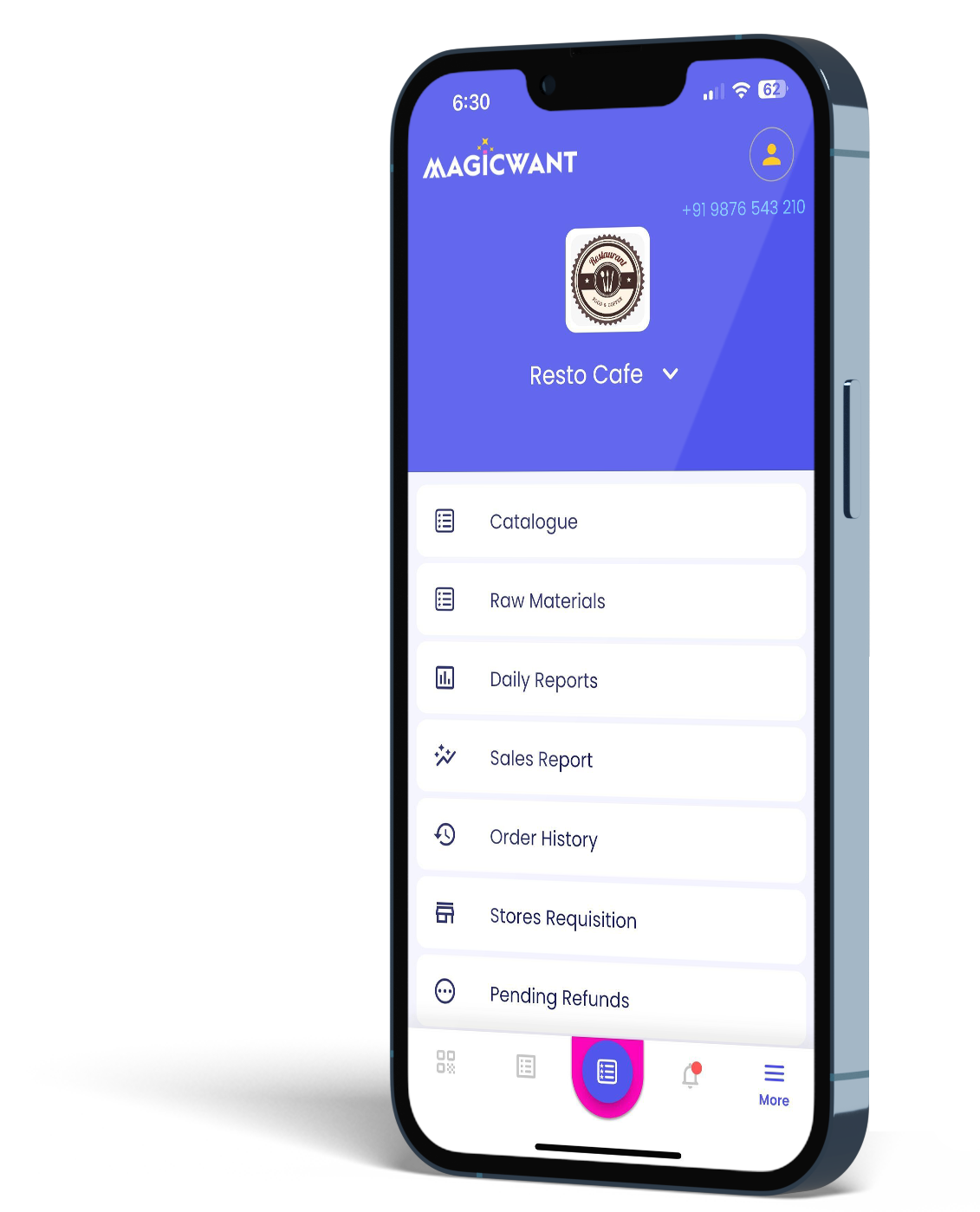
Magicwant is built specifically for restaurant and F&B businesses. It brings together a full restaurant management system, cloud based POS, restaurant order management system, and restaurant delivery management system into one platform that you can actually learn in a day.
No expensive consultants. No confusing dashboards. No pricing designed for businesses ten times your size. You run your restaurant. Magicwant handles the numbers, the orders, and the inventory – so you can focus on what you actually care about.
Visit magicwant.io to see how it works for restaurants exactly like yours.
Cloud-based POS
A full restaurant management system. Start your free trial!