
Picture this: it’s Friday evening, your dining room is full, three delivery platforms are pinging simultaneously, and your kitchen crew is trying to figure out which order goes to which driver. Tickets are everywhere. Tempers are rising. And somewhere out there, a customer is refreshing their app wondering where their food is.
Sound familiar? It’s a scene that plays out in thousands of restaurants every weekend. The heartbreaking part is that it doesn’t have to.
The Delivery Problem no one warns you about
When restaurants first add delivery, the focus is usually on the platform – Grab, Foodpanda, your own website. What nobody tells you is that each platform creates its own silo. Orders come in through different tablets, get printed on different slips, and get tracked differently. Your staff is juggling three devices instead of running one smooth operation.
A solid restaurant management system changes this completely. It pulls every incoming order — regardless of source — into a single stream. Your kitchen sees one ticket queue. Your front-of-house sees one screen. No more tablet-hopping, no more missed orders, no more guessing.
Timing is Everything (and Timing is Hard)
Here’s what separates good delivery from great delivery: the moment a driver arrives, the food is ready. Not five minutes before — cold food. Not ten minutes after — frantic kitchen, angry driver.
Getting this right takes more than good intentions. It takes a restaurant delivery management system that accounts for prep times, driver ETAs, and kitchen capacity all at once. The best setups send a prep trigger the moment a driver confirms pick-up — not when the order first comes in. That single change cuts food wait times by 15 to 20 minutes during a busy Friday rush.
Most restaurant management software worth its price includes this kind of delivery timing logic built in. You shouldn’t need a separate tool, a spreadsheet, or a person with a stopwatch.
The Real Cost of Getting It Wrong
Let’s talk numbers. The average restaurant loses roughly 10 to 15% of delivery revenue to errors — wrong items, late arrivals, cancelled orders. Multiply that over a year and you’re looking at tens of thousands of dollars quietly walking out the door.
A restaurant management system addresses this at the source. It confirms orders, flags unusual requests, and routes everything clearly so your team isn’t guessing. Some systems even auto-confirm and relay order details to your kitchen before a human has touched a screen.
Your restaurant order management system should be doing the heavy lifting. Not your staff.
Why Cloud Matters for Delivery
Here’s something worth thinking about: delivery doesn’t clock off at 10pm. Neither does your data.
A cloud based POS means you can check your delivery stats from home, update your menu pricing at midnight before a promotion goes live, or see which delivery zones are actually profitable — without being on-site. That kind of visibility used to be reserved for restaurant chains with IT departments. Now it’s available to anyone.
Cloud POS system infrastructure scales, too. If you launch a second location or open a ghost kitchen, your data travels with you. The system adapts rather than breaks.
The old argument was that cloud based retail POS setups were too expensive or too complex for independent operators. That argument aged badly. Today, the barrier is closer to a few hundred dollars a month — often less than what restaurants spend on paper receipts and manual reconciliation.
What a good Restaurant Management System actually looks like
The best POS system for restaurant owners isn’t necessarily the flashiest one. It’s the one your staff actually uses without complaining.
Good restaurant software should accept orders from every delivery channel into one view, communicate prep times to the kitchen automatically, let you update prices and availability in real-time, and show you which items, which zones, and which times are most profitable.
POS systems for retail are often compared to restaurant systems, but they’re built for different rhythms. Retail is transactional. Restaurants are theatrical — every service is a live show with timing, team coordination, and thousands of moving parts. Your system needs to understand that.
Point of sale systems for retail won’t cut it in a busy kitchen environment. You need something purpose-built.
The Shift that changes everything
Restaurants that thrive in the delivery era aren’t the ones with the cheapest platforms or the biggest marketing budgets. They’re the ones with operational clarity. They know what’s coming in, what’s going out, and where the gaps are.
A restaurant management system gives you that clarity. Not magic. Not miracles. Just clean, consistent data and a kitchen that knows exactly what it’s doing.
The restaurants outperforming their competition right now — often smaller, leaner operators — have made one smart call: they stopped patching problems and started running on the right infrastructure.
That’s a choice you can make today.
Ready to take control of your Delivery Operation?
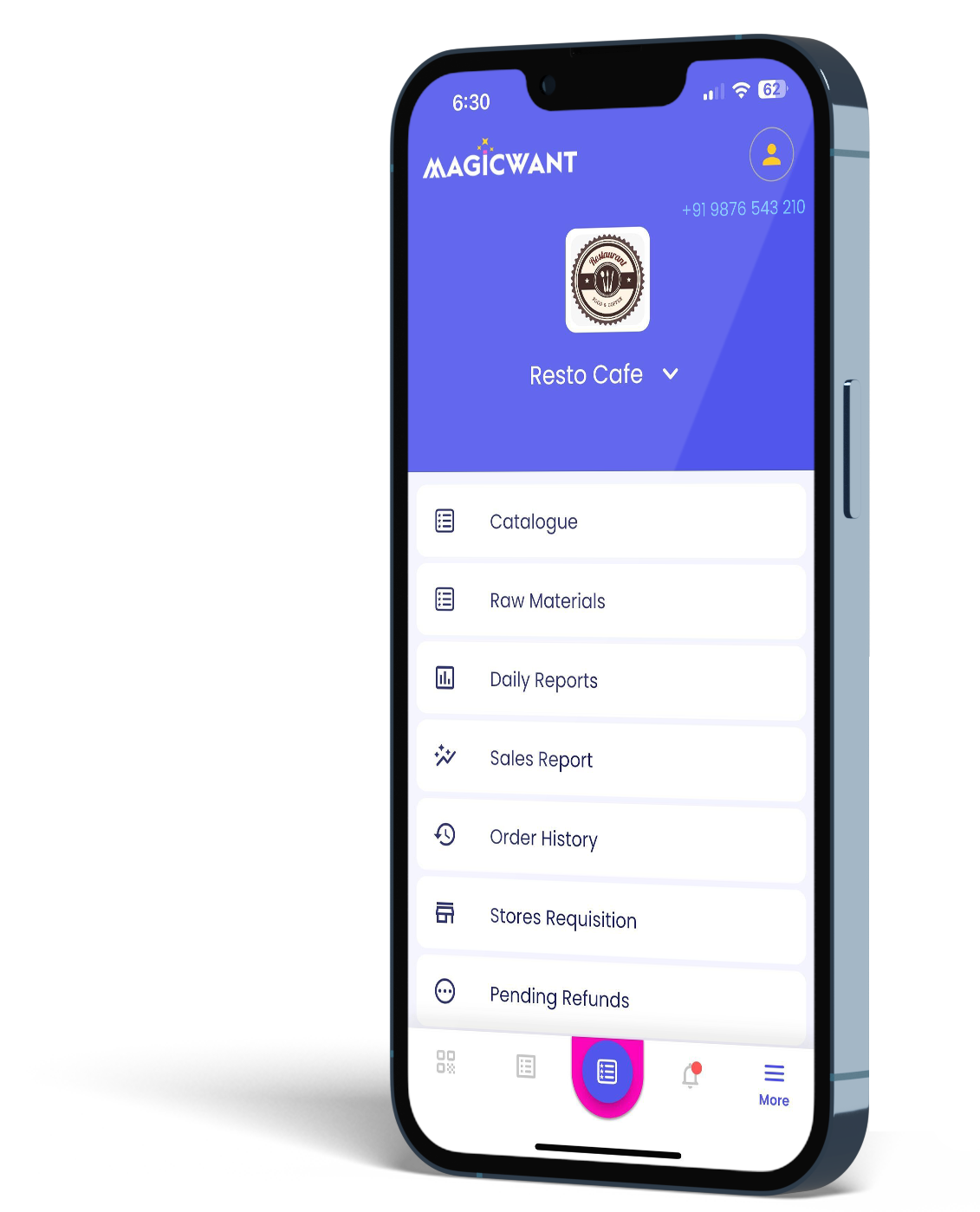
Magicwant’s restaurant management system was built for restaurant owners who are done with chaos. It’s fast to set up, genuinely easy to use, and designed to level the playing field between independent operators and the big chains. If you’re ready to see what running a tight delivery operation actually feels like, Magicwant is worth a serious look. Easier done than said.
Big tech. Small price
₹450 a month. No setup fees. No annual lock-in. Your entire shop — billing, inventory, online sales — for less than what you spend on data.
Start Your 1 Month Free Trial
